How Product Decisions Move Through a Manufacturing Business
One of my favorite national parks is Theodore Roosevelt National Park in North Dakota. I backpacked there a few years ago and really enjoyed the solitude.
After hiking through the petrified forest, I noticed a group of bison in the distance standing directly on the trail ahead. I stopped for a while and watched them, hoping they would eventually move. Since I was by myself, I did not want to get too close. After a few minutes, it became clear that I was the one who needed to adjust my plans.
I ended up leaving the trail and walking around them through the grasslands. Once I got moving again, I found myself paying much closer attention to where I was headed and how I was moving through the terrain.
Lately, I have been thinking more about how small decisions influence the direction we ultimately take. I started looking at product management more as a system behind how decisions move through the business.
In many small to mid-sized manufacturers, product decisions start with a small group of leaders. But as the business grows, more teams become involved and the decisions become harder to connect across the organization.
Leaders can lose confidence in where resources should be invested, which products will drive future growth, and how the portfolio supports the direction of the business. That is what led me to think more deeply about the product system behind those decisions.
I started seeing four connected areas behind how product decisions move through the business: Ownership, Insight, Direction, and Execution.
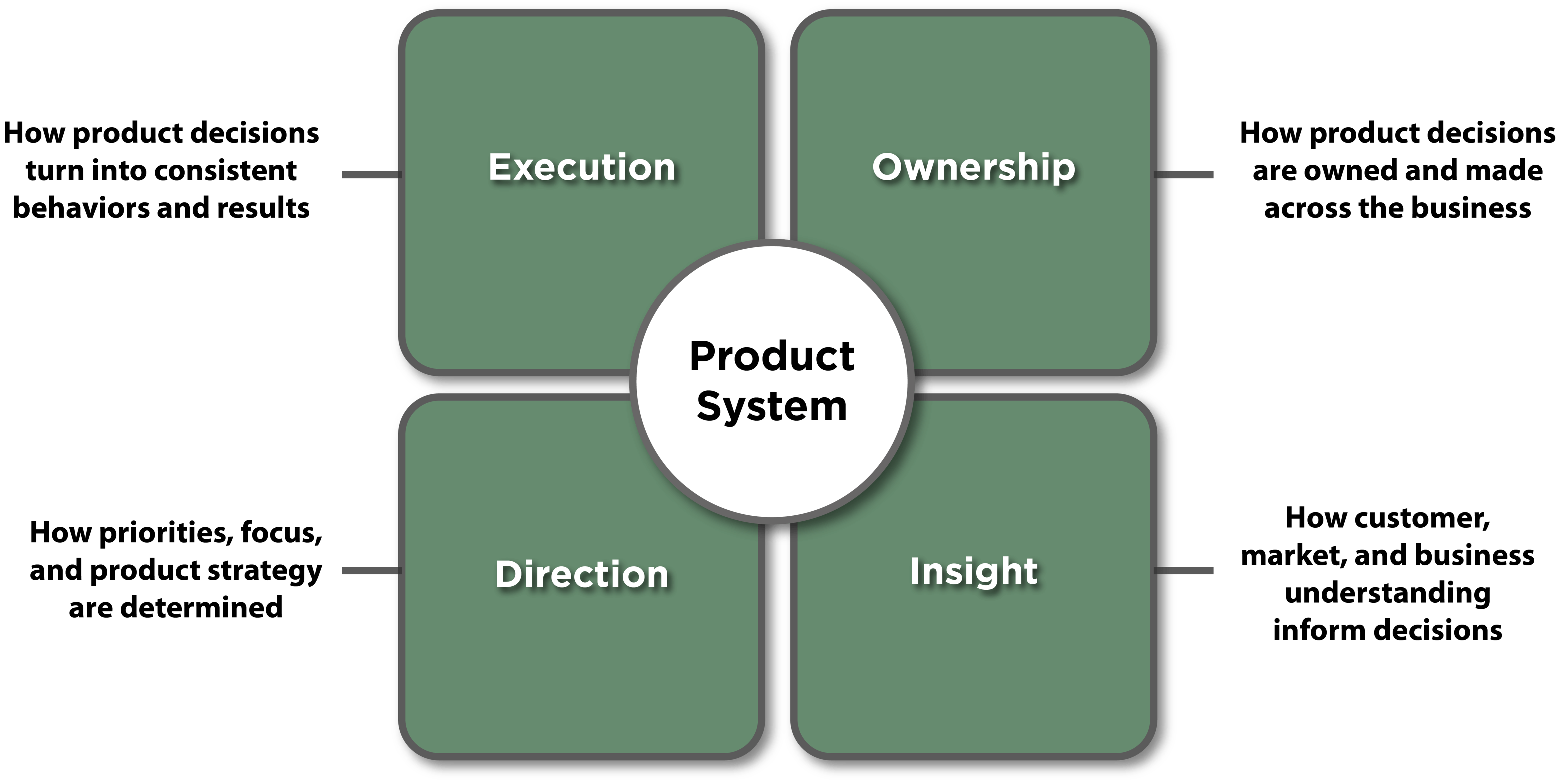
Ownership is how product decisions are guided and made across the business. Someone needs to guide decisions, work through trade-offs, and help the team stay aligned on what matters most to customers and the growth of the business.
Insight is how customer, market, and business understanding inform decisions. That includes both qualitative and quantitative understanding from outside and inside the business.
Direction is how priorities, focus, and product strategy are determined. It creates alignment around where the business is trying to go, which products support that direction, and how they should go to market.
Execution is how product decisions turn into consistent behaviors and results across the organization. It shows how teams align, operate, and move products forward.
The system only works when the pieces work together. Ownership guides decisions. Insight helps teams understand what matters. Direction creates focus. Execution turns decisions into consistent action across the organization.
When those areas are connected, product decisions begin to feel more intentional and aligned to the direction of the business.
If you step back and look at your business today, where does the system feel strongest? And where does it begin to break down?
You can identify gaps in Ownership, Insight, Direction, and Execution in your organization with the Product Strategy Assessment.